Digital vs vernier caliper
On this page
- Three ways to show the reading
- Side by side
- Is there such a thing as a “digital vernier caliper”?
- What the buttons on a digital caliper do
- Is a digital caliper more accurate?
- Which should you choose?
- What to check before you buy
- Learn the vernier on the simulator
- Questions about digital and vernier calipers
- Sources
Vernier, dial and digital calipers have the same jaws, beam and depth rod. They differ only in how they show the fine part of the reading, and that changes how quickly they are read, what can go wrong, and what they need. This guide compares them and helps you choose.
Three ways to show the reading
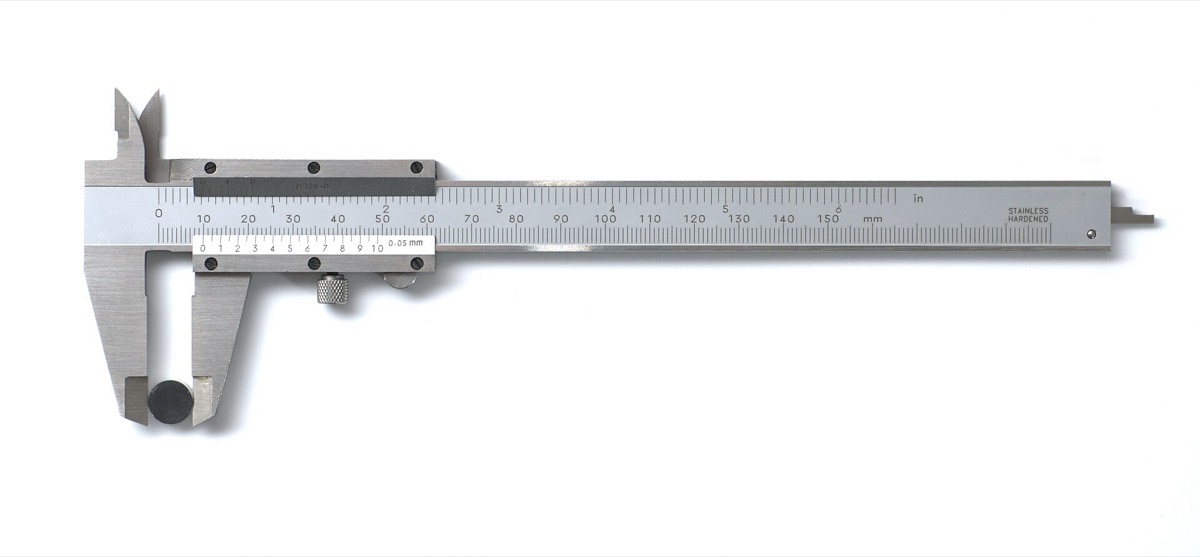

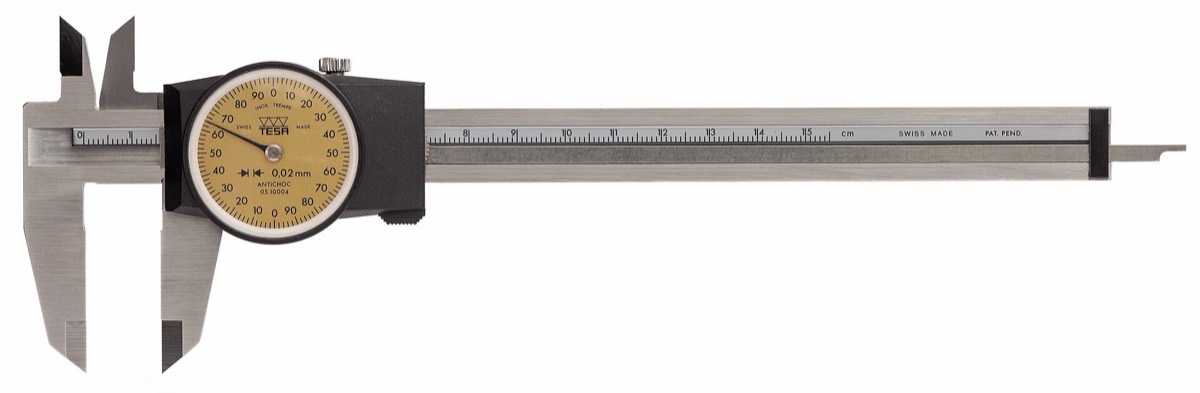

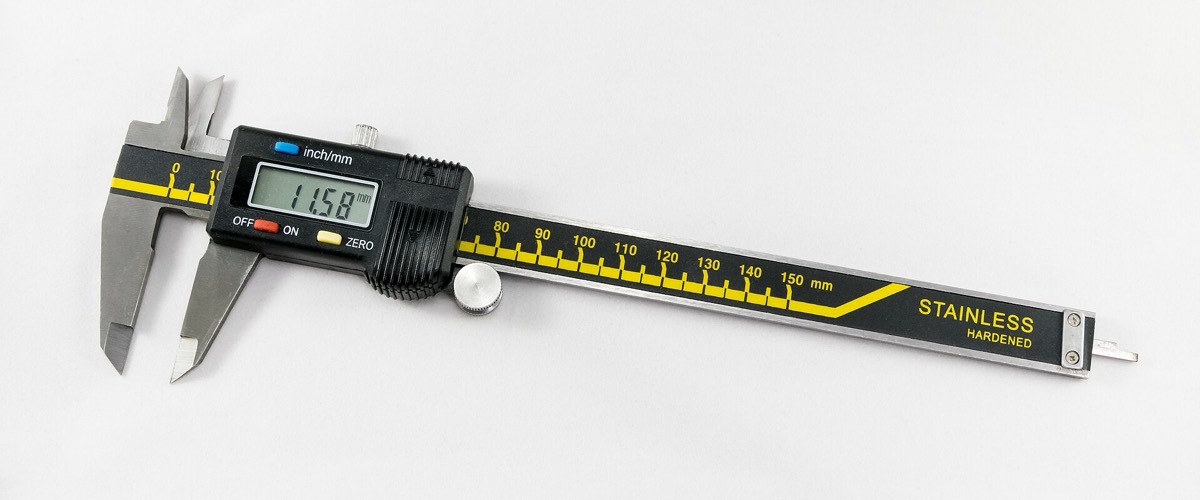

Side by side
| Compared | Vernier | Dial | Digital |
|---|---|---|---|
| How the fine part is shown | A vernier scale, read by eye | A needle on a dial | A number on a display |
| Typical smallest step | 0.02 or 0.05 mm; 0.001 or 1/128 in | Shown on the dial face | 0.01 mm on many models |
| Power | None | None | A battery |
| Millimetres and inches | Only if it has both scales | One unit per dial | Usually a button switches |
| Set zero anywhere | No | Usually by turning the dial bezel | Yes, with a zero button |
| Reading errors | Choosing the wrong line, parallax | Miscounting turns of the needle | Few, if the display is trusted |
| Skill needed to read | Most | Some | Least |
Is there such a thing as a “digital vernier caliper”?
Shops often list digital calipers as “digital vernier calipers” or “vernier caliper digital”, because “vernier caliper” has become the everyday name for any caliper. Strictly, a digital caliper has no vernier scale: it senses the position of the slider electronically and shows the number. A “manual vernier caliper” is the ordinary kind, read from its scales.
What the buttons on a digital caliper do
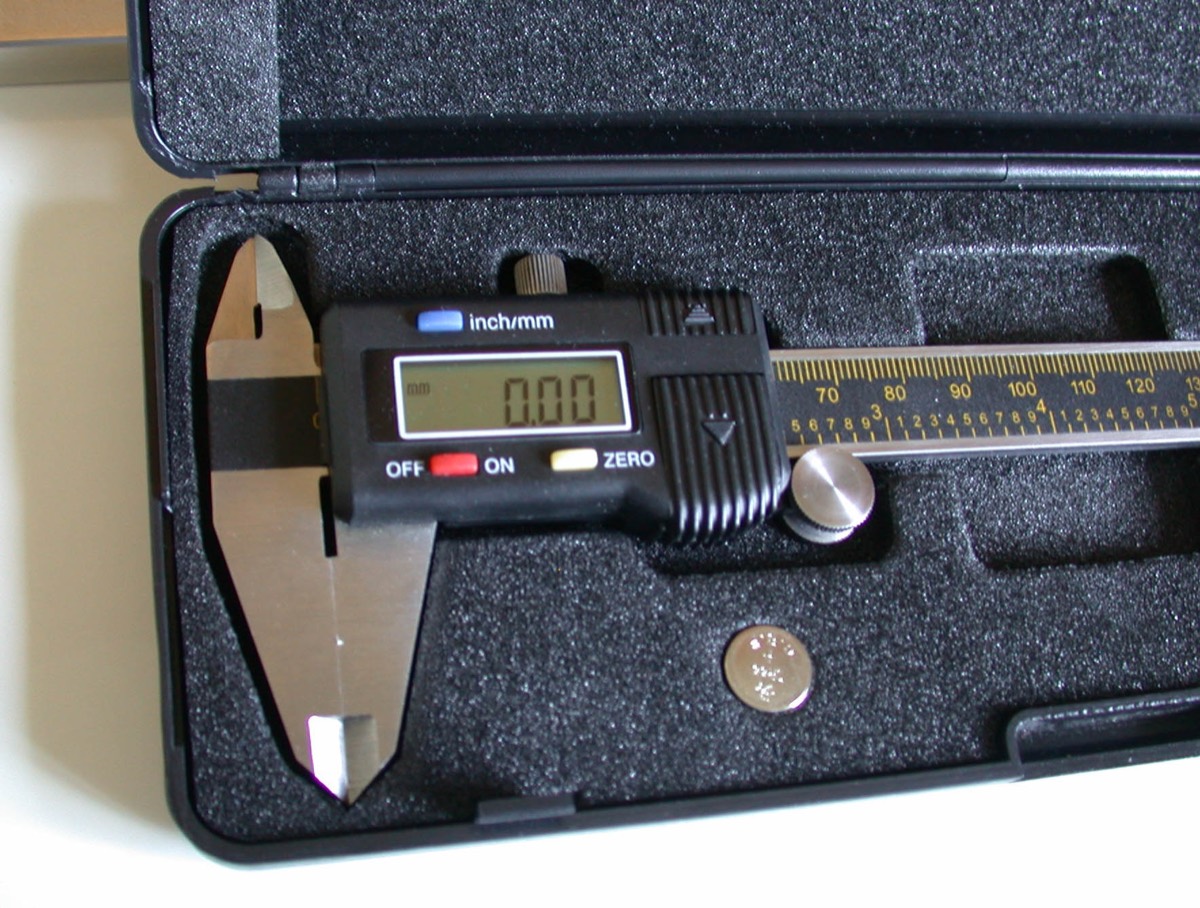

- On/off. Saves the battery.
- Zero. Sets the display to zero where the jaw is. Close the clean jaws and press it before measuring. Pressed with the jaws open, it lets you measure a difference from that size.
- mm/inch. Switches the unit of the display.
Some models separate an absolute zero from a temporary one. Mitutoyo, for example, lists an ORIGIN (ABS-Zero) function and an ABS/INC (INC ZERO) function on its 500-196-30. Check your caliper's manual for exactly what each button does.
Is a digital caliper more accurate?
Not automatically. A digital display usually shows 0.01 mm, a finer step than a 0.02 mm vernier, but a finer step is not better accuracy. In the default table used for calibrating calipers, both are allowed ±0.02 mm on outside measurements up to 50 mm. Real models differ: Mitutoyo states E ±0.02 mm, S ±0.04 mm for its digital 500-196-30 and ±0.03 mm for its 0.02 mm vernier 530-122, both 0–150 mm. The accuracy guide explains these figures and where they come from.
Which should you choose?
- For school and exams: learn the vernier caliper. Practicals and exam questions use it, and the skill transfers to every other kind.
- For quick, repeated workshop measurements: a digital caliper is fastest to read, switches units and can be zeroed anywhere.
- Where batteries are a nuisance, or as a reliable spare: a vernier caliper always works.
- For comparing parts to a size by eye: a dial caliper shows small differences as the needle swings.
What to check before you buy
- Range: 0–150 mm (0–6 in) suits most school and bench work.
- Least count or resolution: engraved on a vernier, printed on a dial, or stated for a digital display.
- Stated accuracy: the maker's maximum permissible error, ideally both the outside (E) and the other faces (S).
- Jaws and depth rod: inside jaws and a depth rod or bar for all four kinds of measurement.
- Units: metric, inch, or both.
- Paperwork: an inspection or calibration certificate if the measurements will be relied on.
- Feel: the slider should move smoothly without play, and the closed jaws should show no light between them.
Learn the vernier on the simulator
The vernier caliper simulator lets you move a vernier caliper, read it with every step marked, and practise with feedback. Start with the reading guide or the 20 practice questions.
Questions about digital and vernier calipers
Is a digital vernier caliper the same as a vernier caliper?
“Digital vernier caliper” is a common shop name for a digital caliper, but a digital caliper has no vernier scale: it measures the slider’s position electronically and shows the number on a display. A vernier caliper is read from its two engraved scales.
Which is more accurate, digital or vernier?
Neither automatically. In the default calibration table, a 0.01 mm digital caliper and a 0.02 mm vernier caliper are both allowed ±0.02 mm on outside measurements up to 50 mm. Compare the maker’s stated accuracy for the actual models.
Should a student learn the vernier caliper if digital calipers exist?
Yes. School practicals and exams ask you to read vernier scales, a vernier caliper needs no battery, and understanding the vernier makes it easier to notice when a digital reading cannot be right.
What is a manual vernier caliper?
Another name for an ordinary vernier caliper: one read from its main and vernier scales, with no display or battery, as opposed to a digital caliper.
Sources
- Accuracy and Calibration of Calipers (EDU-15003A), Mitutoyo America Corporation, 2018. Checked 18 November 2026.
- Vernier Scale Caliper, Series 530, Mitutoyo. Checked 18 November 2026.
- Digital ABS AOS Caliper 500-196-30, Mitutoyo Europe shop. Checked 18 November 2026.
- Calipers, Mitutoyo. Checked 18 November 2026.
This site is independent and is not affiliated with Mitutoyo or any other maker.